Showing posts with label Project Managers. Show all posts

Wednesday, 8 April 2026

Ultimate Guide to Project Collaboration Software 2026

Imagine a Monday morning where your team is scattered across multiple time zones, but the project deadline looms closer than ever. Your inbox is flooded with email chains, each one more confusing than the last, and the team chat is a cacophony of overlapping conversations. This is the reality without effective project collaboration software. In fact, companies without integrated collaboration tools report up to 20% lower productivity, leading to missed deadlines and increased costs.

In this guide, we will explore how project collaboration software, specifically Orangescrum, can transform the way your enterprise operates globally. We’ll delve into the structural issues that plague project management, quantify the cost of inaction, and provide actionable steps to implement a solution that meets the needs of team leads, project managers, and operations managers. This isn’t just about productivity—it’s about empowering your team to work smarter, not harder.

Understanding Project Collaboration Software

Project collaboration software like Orangescrum serves as a centralized platform for managing tasks, timelines, and team communications. Unlike traditional methods that rely heavily on emails and disparate tools, Orangescrum integrates workflow management and task tracking in one seamless interface. This integration is crucial for enterprises where the coordination of large teams and complex projects is paramount.

Read the full Blog


Monday, 23 March 2026

Orangescrum Mobile App Upgrade: What’s New

Mobile productivity has become essential for modern teams. Project managers, developers, and remote teams need tools that allow them to track work, collaborate, and manage tasks from anywhere. That’s exactly why the latest mobile app upgrade from Orangescrum focuses on performance, usability, and better collaboration.

The updated mobile app introduces improvements that make project management smoother and more intuitive for teams working on the go. From faster navigation to improved task tracking, the new upgrade ensures users can manage projects efficiently without needing a desktop.

In this article, we’ll explore what’s new in the upgraded Orangescrum mobile app, how it improves productivity, and why it’s a valuable tool for modern teams.

Why Mobile Project Management Matters

Today’s work environment is more flexible than ever. Teams often operate remotely, across time zones, or outside traditional office spaces. Because of this shift, project management tools must support real-time collaboration from mobile devices.

A powerful mobile app helps teams:

  • Stay updated on tasks and deadlines

  • Respond to project updates quickly

  • Communicate with team members instantly

  • Track project progress anywhere

The upgraded Orangescrum mobile app addresses these needs by providing a streamlined interface and powerful project management capabilities in a mobile-friendly format.

What’s New in the Orangescrum Mobile App Upgrade

The latest upgrade focuses on usability, performance, and better workflow management. Here are the key improvements.

Read the full Article


Thursday, 18 December 2025

Top 15 Productivity Hacks for Project Managers

Delivering projects on time, within budget, and with the right quality is never easy — especially when you’re juggling deadlines, resource constraints, unpredictable stakeholders, and shifting priorities. That’s why Productivity Hacks matter more than ever.

In 2026, productivity isn’t just about working harder. It’s about leveraging smarter tools, optimized communication, and proactive planning to keep everything on track.

This guide breaks down the Top 15 Productivity Hacks for Project Managers to improve efficiency, accelerate delivery, and reduce daily chaos — no matter the industry.

Why Productivity Matters More Than Ever

With distributed teams, hybrid work modes, and increasing client expectations, project managers must:

  • Reduce delays and rework

  • Improve decision-making with real-time data

  • Manage resources intelligently

  • Minimize communication bottlenecks

  • Keep teams aligned and accountable

The right productivity hacks help you stay ahead — not just keep up.

Continue Reading


Tuesday, 25 November 2025

Resource vs Time-Constrained Scheduling: Complete Guide for Project Managers

Project scheduling is a balancing act between time, resources, and scope. Every project manager eventually faces the big question:

Should I plan based on available resources or the required timeline?

This is where Resource-Constrained Scheduling (RCS) and Time-Constrained Scheduling (TCS) come into play.

Both are legitimate scheduling methodologies used in modern project management—but they serve completely different strategic purposes. Knowing which one to apply can make the difference between on-time delivery and project chaos.

This comprehensive guide covers everything you need to know about both scheduling types—from definitions and techniques to real-world examples, pros and cons, mathematical foundations, decision models, and how tools like Orangescrum implement them.

What Is Resource-Constrained Scheduling? (RCS)

Resource-constrained scheduling is used when resources are the main limiting factor in a project. The timeline is allowed to shift based on resource availability.

Resource-Constrained Scheduling (RCS) is a project scheduling method where resource availability dictates the schedule, and the project timeline is flexible.

Monday, 14 July 2025

A Practical Breakdown of Automation in Project Management


Project managers today wear too many hats. They plan, organize, assign, follow up, update stakeholders, generate reports, and repeat that across multiple projects, teams, and tools. The result? Burnout, delays, inefficiencies, and missed opportunities.

But automation has changed the game.

In this comprehensive guide, we’ll explore:

  • Why project management automation matters more than ever

  • What tasks and processes are ideal for automation

  • Where automation becomes a liability instead of a strength

  • Popular project management tools that enable automation

  • How to strike the right balance between machine logic and human

leadership

Let’s dive in.


These tools empower teams to maximize productivity by leveraging automation in project management software workflows.

Why Project Management Automation Matters More Than Ever

Modern project management is no longer limited to Gantt charts and spreadsheets. Today’s projects span distributed teams, tight timelines, fast-changing scopes, and rising stakeholder expectations.

Read the full blog

Friday, 21 March 2025

Common Project Management Mistakes and How to Avoid Them?


Project management is essential for any successful initiative, but even the most experienced managers can fall into common traps that derail timelines, inflate budgets, and frustrate team members.

From poor communication to unrealistic deadlines, these mistakes don’t just slow projects down; they can lead to outright failure.

The good news? Most of these pitfalls are entirely avoidable. With the right strategies and project management software, you can navigate around them and keep your projects on track.

In this guide, we’ll break down the most common project management mistakes and show you exactly how to prevent them.

Whether you’re a seasoned project manager or just starting out, these insights will help you run smoother, more efficient projects.

Read the full blog

Monday, 17 March 2025

How to Implement the 80/20 Rule in Project Management


Project managers face various dilemmas and one of the most significant ones is that they have too many tasks at hand and very little time to execute. The secret to managing projects and executing them effectively isn’t about doing everything rather to focus on the most important ones. 

This is where the 80/20 rule comes in handy; it is also called the Pareto Principle. Its philosophy is that 80% of outcomes result from just 20% of efforts.

When it is applied to project management, this principle helps team members prioritize tasks, optimize resources, and maximize the impact.

Today, in this guide we will explore how you can leverage this 80/20 rule to streamline workflows, increase efficiency, and drive project success. 

Understanding the 80/20 Rule in Project Management

Originally the Pareto principle was an economic concept, however, its application later extended far beyond. In project management, this rule suggests that:

  • 80% of project delays come from 20% of bottlenecks.

  • 80% of the results stem from 20% of project activities.

  • 80% of project costs arise from 20% of the resources.

  • 80% of team performance issues come from 20% of the team members.

By recognizing these patterns you empower project managers to focus their efforts where it matters most.

Read the full blog


Thursday, 13 February 2025

Leverage Time Management to Enhance Employee Well-Being


Achieving a balance between employee well-being and productivity is crucial for both the employer and employees. Productivity greatly depends on employee easenes; when they feel overworked and stressed they become less productive which can lead to burnout and a decline in morale.

On one hand, there are businesses that prioritize employee well-being and experience enhanced creativity, commitment, and efficiency and on the other hand, there are those who feel overwhelmed by work leading to underperformance.

At the crux of these objectives is effective time management – which is nothing but a strategic tool to boost productivity and safeguard both the mental and physical health of the employees.

In the following blog, we will explore how effective time management can balance employee well-being and productivity. We will delve into its benefits, provide actionable strategies, and also provide insights into building a supportive work culture.

How Employee Well-Being and Time Management are interdependent


Time management is all about planning and executing tasks in an allotted time. It increases effectiveness, efficiency, and productivity. Moreover, it’s not about working long hours but working strategically to meet business goals.
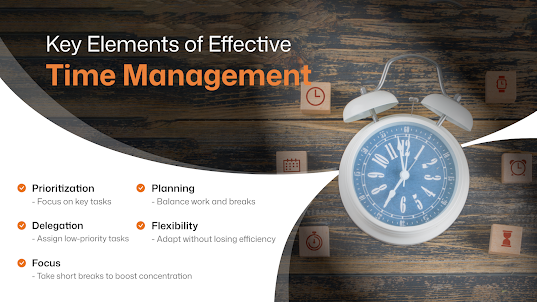
Effective time management involves:

  • Prioritization: Determine which tasks need to be completed first. Implement the Eisenhower matrix to prioritize work.
  • Planning: Allocate time for both work and breaks.
  • Delegation: Determine the tasks that are Urgent but not important, you can simply delegate them.
  • Flexibility: Be flexible by allowing room for unexpected challenges without affecting productivity.
  • Focus: Breaks in a short interval also increases focus facilitating faster execution of tasks.

These aspects enable employees to create a daily routine that promotes productivity without affecting personal well-being.

Read the full blog

Sunday, 2 February 2025

Boost Your Project Efficiency with Gantt Charts

Managing projects without any structured plan is like walking in the dark. You keep moving on with your projects but staying aligned and on-course becomes a challenge. This is where Gantt charts can turn things around.

It provides a visual roadmap of all the tasks, deadlines and dependencies needed to progress which is essential in helping the team members to stay aligned and keep the projects running smoothly.

Gantt chart has been in use for over a century and today it remains as one of the most effective methods for modern project management.

Be it for managing a software development cycle or boosting a marketing campaign, a well-designed Gantt Chart will enhance project planning, streamline execution and also ensure timely delivery.

In this blog, we will explore what Gantt charts are and why they are crucial; we will also explore how you can leverage them for better project planning and execution.

What is a Gantt Chart?

A Gantt Chart is a type of bar chart which represents a project’s schedule. It visually showcases tasks that are completed and yet to be done in a timeline, it showcases their start and end dates, dependencies, and progresses.

Each task is represented by a horizontal line which makes it easier to see how different activists interact to produce a common business goal.

Key Components of a Gantt Chart:

  • Tasks – They are the individual work items and activities in a project
  • Timelines – Time taken for each task completion
  • Dependencies – Determine the relationships between tasks for example Task B cannot start until Task A is completed
  • Milestones – Important events or checkpoints in the project
  • Progress Indicators – Visual indicators showing how much of a task is completed

Gantt charts are essential for project managers, teams and stakeholders who want a high-level bird’s eye view of the project’s timeline and status.

Read the full blog

Tuesday, 28 January 2025

How to Leverage KPIs for Smarter Project Management Decisions


In project management success is not only about meeting customer deadlines; it’s also about ensuring that each step of the development process contributes to meeting the business goals and objectives.

To measure success effectively, project managers have to rely on some important Key Performance Indicators or KPIs. 

These metrics provide key insights about the project health, efficiency of the development and alignment with business objectives.

The following blog dives into the most critical KPIs for successful project management. We will cover its significance and how to leverage the KPIs to track them effectively. 

What Are KPIs in Project Management?

Key performance indicators or KPIs are values that can be measured indicating how effectively a project is achieving its objectives. 

They provide project managers and stakeholders with quantifiable data that can be implemented to track performance and make strategic decisions. Without using the KPI’s It’s impossible to gauge if the project is on track, facing risks or delivering expected value. 

KPIs vary greatly depending on the project’s nature, goals, and industry. For example, in a construction project you may prioritize cost variance more whereas in software development projects you might focus more on sprint velocity and defect density. 

Why Are KPIs Crucial for Project Management?

  1. Performance Measurement: KPIs provide a clear snapshot of how well the project is progressing. 

  2. Improved Decision-Making: You can identify areas that need attention, employ KPIs to make timely adjustments. 

  3. Alignment with Objectives: Using KPIs you can ensure that the project remains aligned with the organizational goals. 

  4. Risk Mitigation: Identify issues early through KPIs by enabling proactive risk management. 

  5. Stakeholder Communication: These KPIs provide a standardized way to communicate to stakeholders. 

Characteristics of Effective KPIs

To make KPIs valuable and advantageous, they should meet the following criteria

  1. Specific: Define what is being measured

  2. Measurable: The stats generated should be quantifiable

  3. Achievable: Ensure that the KPIs are realistic and attainable

  4. Relevant: You can align your KPI with objectives and goals

  5. Time-Bound: Define a timeframe for measuring the KPIs

Monday, 13 January 2025

Real-Time Reporting: A Game-Changer in Construction Management

Managing construction projects is complicated, managers need to handle numerous stakeholders, dependencies, and deadlines which can make managing construction projects a challenge. 

This demands a more efficient and transparent approach to managing projects. Traditional project management methods just don’t cut it.

You need construction project management software with real-time reporting. This feature redefines how construction projects are managed. 

In this blog, we will explore why real-time reporting is not just a choice but a necessity. This will enable you to stay ahead of the challenge and deliver projects successfully. 

What Is Real-Time Reporting?

Real-time reporting is all about making project data and updates accessible across a centralized platform. It provides stakeholders with updated insights on each aspect of project development - all in real-time.

Instead of relying on spreadsheets or weekly reports, project managers and team members will be able to make informed decisions on the go. 

Construction management software like OConstruction integrates with mobile apps, IoT devices, and cloud-based systems to deliver seamless actionable insights. 

The Challenges of Traditional Reporting Methods

Before understanding the real value of real-time reporting, it’s essential to recognize the limitations of traditional reporting methods. 

  1. Delays in Information: Weekly or monthly reports result in outdated data which cannot provide an accurate forecast of strategies and plans. This can lead to delays in identifying and addressing issues.

  2. Fragmented Data: When data is stored across multiple platforms or apps like spreadsheets it makes it difficult to get a comprehensive view of the project.

  3. Communication Gaps: Manual reporting can cause miscommunication among stakeholders which can lead to errors and rework.

  4. Increased Risk of Errors: Manual data entry increases the possibility of human errors which can disrupt the data and therefore the project itself.

  5. Reactive Decision-Making: Without timely insights, project managers have to anticipate changes in the project and oftentimes react to problems instead of proactively addressing them. 

Thursday, 9 January 2025

How Big Data is Transforming Project Planning and Execution

Managing projects using project management software generates a ton of data on resources, budgets, scheduxles, and risks. Project management tools struggle to make sense out of all the information. 

This is where Big Data comes in; It can help project managers make better decisions, solve problems faster, and improve productivity manifold times. 

From designing and planning to execution and delivery, Big Data is reshaping the way projects are managed, executed, and optimized. 

Big Data isn’t just about storing information, it can also transform the data into actionable insights. This facilitates better decision-making and executes projects smoothly. 

It can assist project managers in predicting potential risks, optimizing resource allocation, improving communication between stakeholders, and more. 

In this blog, we’ll explore how big data is changing project planning and making way for a more easier project execution.

According to McKinsey, using Big Data can increase productivity by up to 25%. 

Planning Phase: Using Data to Plan Smartly

  1. How Big Data Helps in Project Planning

The planning phase is the most crucial stage of any project. For proper planning, you need to be able to anticipate challenges, allocate resources effectively, and create a clear roadmap for success. 

Big Data plays a significant role in creating plans and making them more informative. It can analyze large amounts of data, helping project managers predict what could go wrong and how to prevent it from happening. 

It makes planning smarter, precise and leads to more successful project outcomes. 


  1. Predicting the Future

Big Data enables project managers to predict issues that could arise in the project. After reviewing data from similar projects, you can estimate delays, cost overruns, and other complications.

This ability to foresee issues can help mitigate strategies in advance. This is invaluable in keeping the project on track and within budget. 

Project managers can also gain a clear understanding of what’s in trend in the market at the moment. Such as construction industries can anticipate the material cost, labor availability, and more in real-time. 

A big advantage of using Big Data in project planning is its ability to optimize resource allocation. By analyzing past data, you can create the best strategies for using people, and money. 

This data-driven approach ensures that resources are used efficiently thereby reducing waste and maximizing productivity.

Read the full blog