Friday, 1 October 2021

Critical Path in Project Management – Definition, Method

 After putting a lot of effort into project planning, suddenly you observed that one of your tasks took much longer than expected and during that time a new assignment pop-up.

Also, in such a situation one of the important team members took leave for a few days.

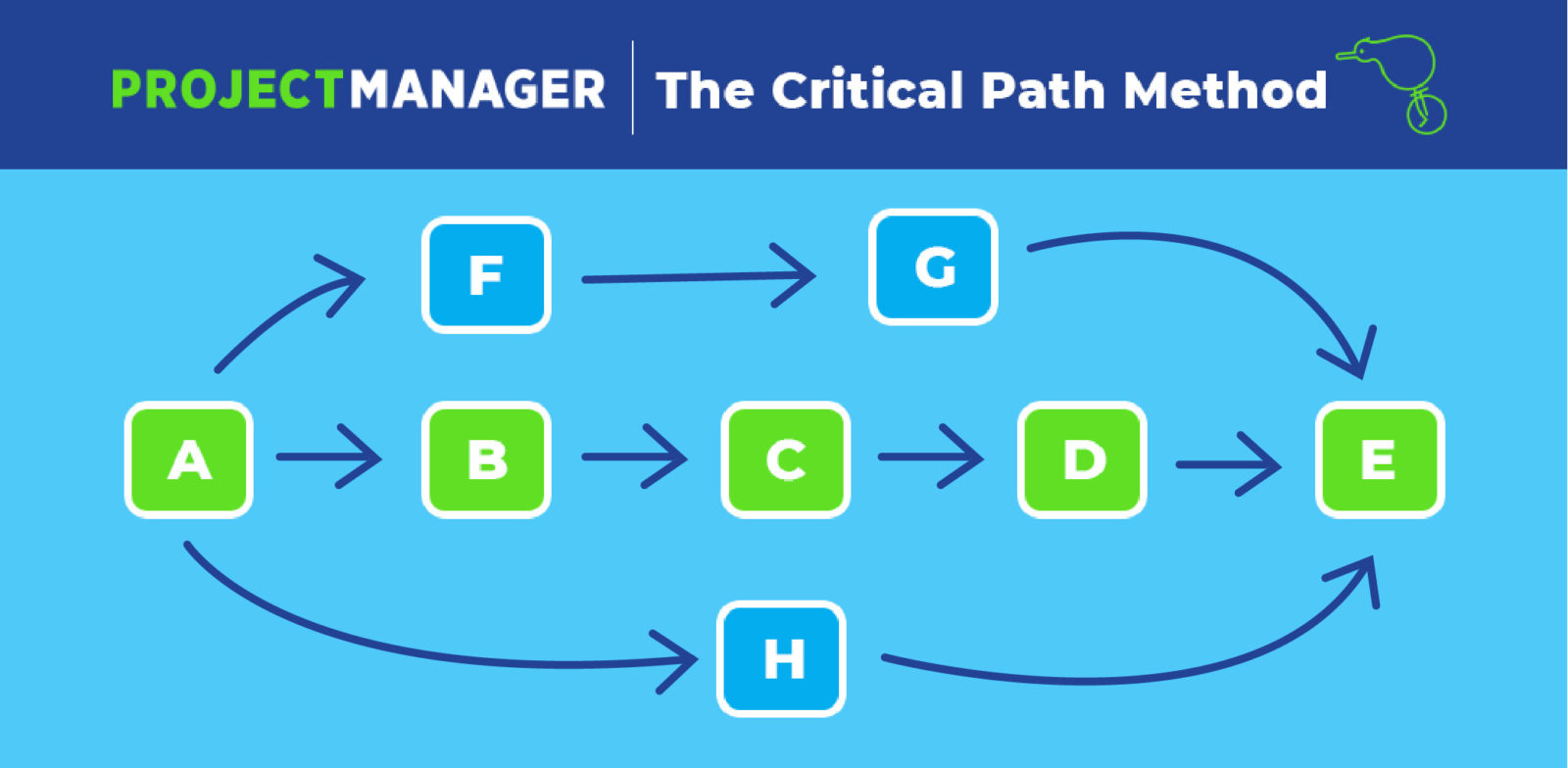
the critical path methodSource: Projectmanager

But you shouldn’t let those events frustrate you, with the Critical Path analysis you can address all these issues.

“A project without a critical path is like a ship without a rudder.” — D. Meyer, Illinois Construction Law

If something comes in the team’s way, you can look for the alterations without causing any delay in the milestones or missing any deadlines.

What is a critical path in Project Management?

A critical analysis is a method of project management.

It creates the shortest timeline for your project, looking at the tasks needed to complete the deliverables, along with the estimated time needed for each step, dependency of the task, and the final milestones.

It is a methodology planned to handle your project in an intelligent way.

With a Critical path, you get the idea about the tasks which can be a reason for the project fall.

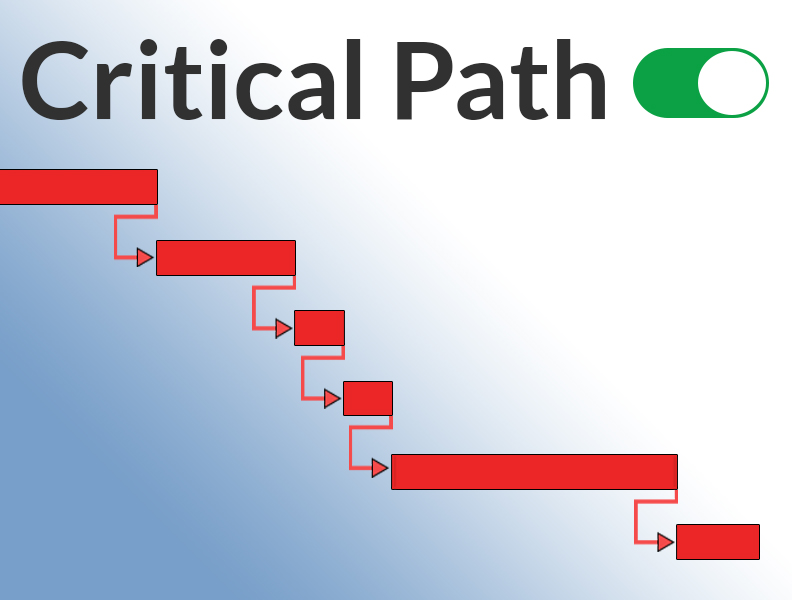
show-critical-path-featuredSource: Planacademy

It will show you the timeline of the Gantt chart, and the task in the critical path turns red. The tasks that are not on the critical path remain in their original color.

“No matter how good the team or how efficient the methodology, if we’re not solving the right problem, the project fails.” – Woody Williams

How do you find the Critical Path?

It’s time to find the critical path in your projects, but how?

To help you identify the critical path in your projects here is a step by step description:

1. Outline the Project scope

As you start finding your critical path, you need to break down what’s involved in the projects.

Breakdown the project structure into:

  • Identify the task: Figure out the details of the project, have a discussion with the stakeholders, and identify the tasks that are necessary for the project.

  • Put the task in order: As you get the idea about the task that needs to be included in the project. The next thing you need to do is put them in order. This will help to identify the dependent task.

  • Duration for task: To find out the critical path in your project, you need to figure a duration for each task. This will help to identify the longest path.

2. Identify the potential path

After identifying the project scope, it’s time to know the paths and strings. A project holds many connected and dependency tasks. So you need to identify these tasks.

It might look like a lot of work to be done.

But it can be done easily with Project Management Tools like “Orangescrum”.

3. Identify the critical path

To find out the critical path, you need to identify the task with the longest sequence. The longest sequence in your project management is the critical path in your project.

Can the Critical Path change During the Project?

A project has many series of interrelated tasks. The team tries to complete the tasks, so as to reduce the stress of critical paths.

The development in the project reduces the critical path in a task or it might bring a new critical path in your task. So, the critical path in the task changes with the development of the projects.

Know more about The Critical Path in Project Management


Wednesday, 29 September 2021

New Product Update - Project Budget and Cost in Orangescrum


Hello, Orangescrum’ers! It’s update time! Now get a clear picture of your project cost within Orangescrum.

With this release, project managers can view project budgets and costs for all your projects. Not only this, but also you can define a role-based hourly rate for your resources.

We are committed to making our product more valuable to customers.

At Orangescrum, we always want to provide the best solution for our customers, so we have created the solution you want to ensure your successful support for the product.

We sincerely thank everyone who contributed by presenting and sharing their views before developing this feature.

Expressing the core values with more clarity and simplicity are the keys to our success.

Recently, we released the Guest user, Custom fields, Timesheet update, Resource Skill Set, and this time we are back with “Budget & Cost”.

What’s New: Budget and Cost

Orangescrum’s Budgeting feature gives a clear picture of whether you’re completing your projects within the budget and how much you’re making profits for your projects.

It includes

  • Setting up the budget for the project

  • Define the approved cost

  • Define hourly rate

Add Budget Cost

The Benefits of Budget and Cost

Budget and Cost give you access to important metrics that are not accessible in traditional project management tools.

This is essential for any company looking to increase the efficiency of their workflow and ensuring they’re getting maximum ROI on their projects.

Budget and Cost also allow you to forecast your project’s profitability, which will make it easier to make the right business decisions.

  • It helps us to specify the cost and keep transparency.

  • It makes the projects’ profitability starting from the planning phase and through the execution.

How to Define Budget and Cost in Orangescrum:

Cost management is a discipline that evaluates the cost of delivering on the product promises made to customers and communicates this information to various stakeholders.

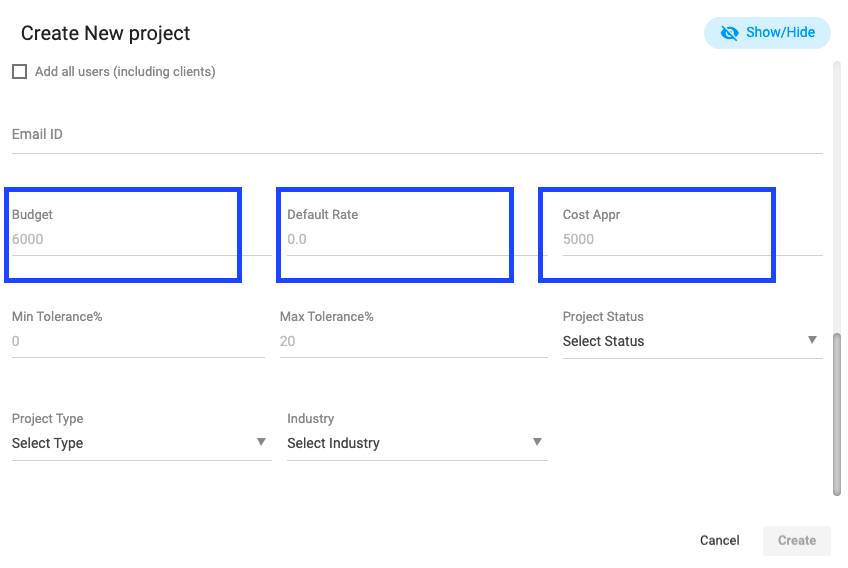
To define the budget & cost the user needs to add the cost value at the time of creating a new project.

  • Click on the create project

  • Scroll down and put the Budget amount

  • Default hourly rate

  • Cost Approve value

User Note

Default hourly rate: When a resource will log to the same project or associated task, the Default hourly rate will be added to the billing.

Cost Approve value: If you’re working on a fixed bid project then you can mention the cost approved, so you can know what is the profit when your project gets over.

Add Role-Based Billing Rate

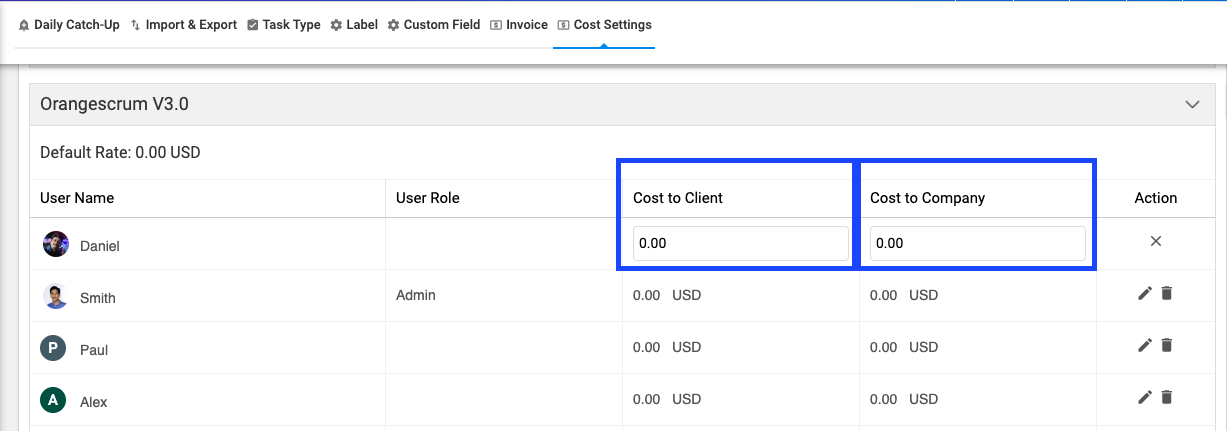
You can define the role-based billing rate for different resources for any project. To make this setup, go to the “Project Setting” and click on “Cost Setting”.

Cost Setting

You can select the user role and then define the cost to company, the cost to client.

Add Role-Based Billing Rate

User Note:

Cost to Company: How much you’re paying to your resources in hourly rate

Cost to the client: How much you’re billing or charing your customer in the hourly rate

Budget & Cost Report

When the resources start log time or submit the timesheet with billable hours, the cost value will be added to the Project cost report.

You can find two cost reports within Orangescrum. Project Cost Report and Resource Cost Report.

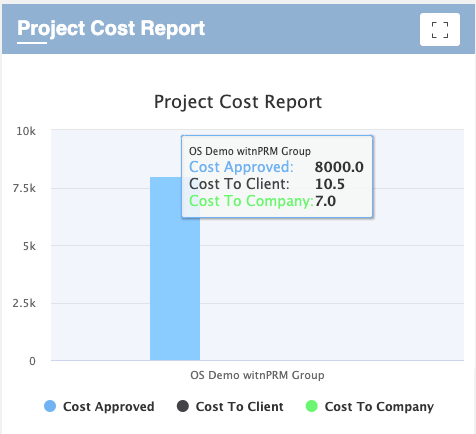
Project Cost Report –  You can find the project cost report on your organizational dashboard page and in-side any individual project overview page. In Dashboard, you can find the Budget & Cost report (that includes Approved Cost, Cost to Client, and Cost to Company) of all projects under your organization.

On the Project Overview page, you can find the Budget & Report for that particular project.

Project Cost Report - Project Overview Page

Resource Cost Report –  As like Project Cost Report, you can find the Resource Cost Report at on your organizational dashboard page and in-side any individual project overview page.

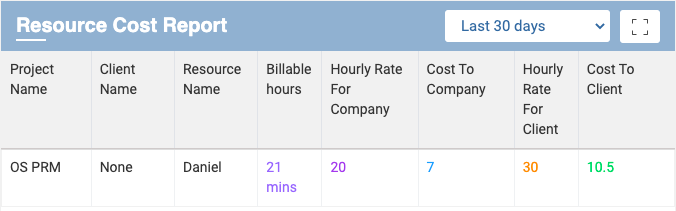
In Dashboard, you can find the Resource Cost Report for your all projects that includes the value of Resource-wise billable hours, Hourly Rate for Company, Cost to Company, Hourly Rate for Clients, and Cost to Client reports for each project.

Resource Cost Report - Dashboard

On Project Overview Page,  you can find the Resource Cost Report for that particular project. The reporting value includes Resource Name, Billable Hours, Hourly Rate for Company, Cost to Company, Hourly Rate for Clients, and Cost to Client.

Resource Cost Report - Project Overview Page

User Note

Users can export this report as well. The report can be export in CSV.

Coming Soon

The “Profitability Report” would be the next release for our users.

Get blogs related to Project & Team management in your inbox

Join 20,000+ others who get our weekly newsletter with insider project management tips! This report will show you how much you have spent vs how much you billed, by this comparison we will show the profitable report for each and every project.

Takeaways:

Budget and Cost provides a way to forecast finances, track project performance, and identify savings opportunities.

You can’t keep a project on track without knowing your costs and the cost of materials. Budget and Cost is the only tool that gives you this information in one place.

Please let us know if we can assist you in your mission to successfully deploy Orangescrum in your company.

Main Article Source: Product Update: Budget and Cost for Project - Orangescrum

Friday, 24 September 2021

Find out what open source has to offer your team's productivity


Combining Open source with Agile Project management will provide you with many amazing results.

With Open Source Agile Project Management your team can effectively organize and prioritize their work, you can check on the work progress and provide solutions to the problems.

This effective methodology doesn’t only help you with planning, organizing, fixing bugs but also increases the productivity of your team.

Agile-is-25-pct-more-productive

Source: Delta Matrics

Leveraging Agile Project management Software with open source creates a positive impact on both the development and runtime environment of your software applications.

The team that uses this advantage has observed better productivity, they were able to deliver applications by following all the goals before the deadline.

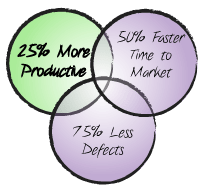
According to 2018 data, projects that follow agile methodology are 28% more successful but the productivity increases to 50% higher when they follow agile methodology with open source.

Why does Agile Project Management work with Open Source?

Agile and Open Source works well together. An organization can effectively collaborate, share, have more flexibility, and contribute faster that help to speed up the organization’s deployment.

Epic Burndown

Source: IntellectSoft

You get the ability to edit and share code in real-time with other developers which is productivity growth. The agile teams that rely on open source gain productivity in the tasks that help the organizations to create High-Quality Software.

An agile Framework in a project helps the contributors to understand the process and the order it follows to complete a work.

When it’s paired with Open Source, the simple framework follows a long way that creates confidence among the potential contributors to get indulged and understand the bugs and how it is fixed.

It creates a bigger impact and provides amazing results to the projects.

Companies are managing their change in velocity by adopting Open Software along with Agile Practices.

How does Open Source Agile Project management Software improve Productivity?

With the Agile Development process and open-source software, you can build the software at a faster and cheaper price.

Open Source offers a large amount of productivity and enhances opportunities. This gives you the ability to easily assess the best open source component that creates productivity in developers.

Know more about open source has to offer your team's productivity


Friday, 17 September 2021

Project Management Methodology and the best practices


The leading business leaders are relying on project management methodologies.

Without it, the project literally gets many drawbacks.

In a recent report by Standish Group, it was observed that only “36% of projects have reached the entire requirement in a project.”

So now the question arises, why do many projects get off track?

There might be a lot of reasons for the lack of requirements in the project. But most of the projects marked a common factor. It is because of unclear directions.

So you can overcome this issue by following the project methodology.

Project management Methodology

A Project management Methodology refers to a set of principles and processes used to manage a project.

The project methodologies help in defining a governance structure, process guidelines, processes involved, test activities, and deliverables. All the features involved are necessary for project success.

So, if you want to manage your project in the best possible way, the project management methodology will help you in achieving it.

Why do you need a Project management Methodology?

Project Management methodology generally aims to standardize, organize and structure the work methods.

This helps to keep the focus on all the projects and allows you to repeat the successful aspects in every project and if any mistakes occur, you can rectify it and learn from them.

It results in continuous improvement in a project.

With Project Management methodology, you are adding more efficiency to the project.

“No matter how good the team or how efficient the methodology, if we’re not solving the right problem, the project fails” – Woody Williams

What are the various types of Project Management Methodologies?

A project becomes successful depending on the project methodology it has used. A methodology that works for you doesn’t mean the same methodology will work for the other.

Therefore it is important to understand the various methodologies and choose the right one.

Here is the list of project management methodologies to use for your project:

1. Agile:

After the dissatisfaction with the linear approach of traditional project methodologies, agile project management was developed.

Agile project management methodology was created to manage complex projects. It is an iterative and people-centric approach to project management.

With Agile Project Management Software, you can reduce the compressibility of the project by breaking down the project into small segments.

The key principle of Agile Project management methodology is:

  • Open to data-driven change

  • Quick

  • Collaborative

In many methods of Agile Project management, you can add the “work to be done” in the backlog. The team can work through various phases or cycles.

Benefits:

  • Flexibility and Freedom: As there are no fixed stages or focus only on requirements, this provides your resources more freedom to experiment and create incremental changes. This makes it fit for creative projects.

  • Low risk: Using Agile Project management, you will receive regular feedback from the stakeholders.
    This helps to get the review and change it accordingly. This reduces the risk of project failure, as the stakeholders are involved in every step.

2. Scrum Methodology:

It is a form of Agile Project Management. It is more like a framework than a project management methodology.

It solves most of the problems faced by software developers. Such as inflexible projects plan, convoluted Development Cycles, and shifts in production Schedules.

In Scrum, a small team that is led by the scrum masters works to clear all the obstacles to work more effectively.

The team works in short cycles of two weeks, which is known as “Sprints”. The team members held daily meetings to discuss the work and problems that needed to be solved using this methodology.

This methodology allows rapid growth and testing mostly within small teams.

3. Kanban:

It is another framework used for implementing Agile, based on the capacity of the team.

It is a simple, clear, and most effective project management methodology. With Kanban, the project can manage the task, files, and list in a single interface.

  • Kanban Board: The Kanban Board, which is used to help the team management work effortlessly. Kanban Boards are mostly represented as interactive panels with virtual forms of sticky notes. It can move around easily and that helps in organizing the task and to-do list.

It can move around easily and that helps in organizing the task and to-do list. The Kanban board works great for the team, as the team can get a visual representation of the project progress.

Critical Path Method: The Critical Path methodology categorizes all the important activities that are necessary to complete the project within a work breakdown structure.

You get to map the projected duration for each task and the dependency on them. It helps to map out the tasks that can be completed simultaneously, and what activities need to be completed before others start.

Advantages

Prioritize: The success of CPM methodology depends on pointing to the critical and non-critical activity. Once the mapping is done, it helps you to prioritize the resource in a better way.

Schedule Better: As you emphasize mapping the duration of activities and their interdependence. Once the mapping is done you can schedule the task in a better way. If task X depends on task Y that needs to be finished first. With CPM you can identify and schedule the task.

5. PRISM:

PRISM stands for Project Integration Sustainable Method, is a methodology created by the Green Project management Global.

The approach focuses on accounting and minimizing the adverse environmental impact on the project. It varies from the traditional methodologies. This methodology focuses on the entire lifecycle of the project post-delivery that helps in maximizing sustainability.

6. Waterfall project management methodology:

It is a traditional form of managing projects. The Waterfall methodology follows the common process of planning out a project, Sequence the tasks, and working out on it to get the final results.

Main Article Source: Project Management Methodology - Orangescrum